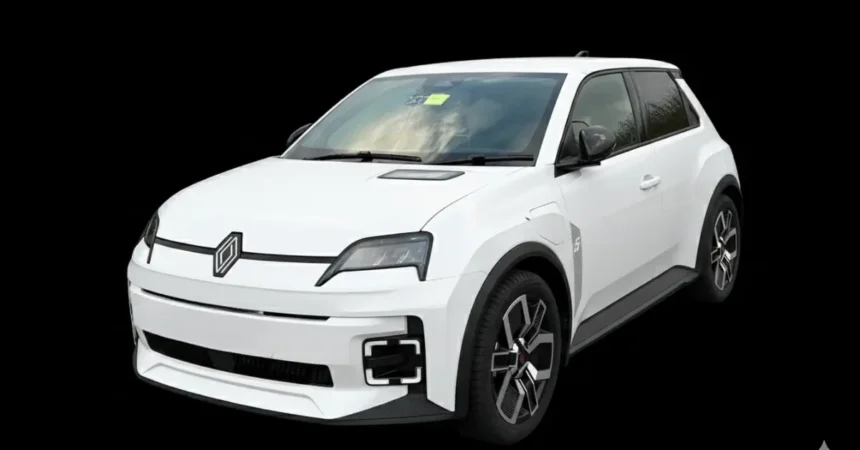
Ollie Kew’s recent nit-picking of the Renault 5 didn’t bother me much—until it unlocked a memory I’d been ignoring for months. Despite how much I genuinely enjoy this little electric hatch, there’s one feature that has tested my patience since week one.
The built-in AI voice assistant.
And not just because it mishears commands or struggles with accents. Those flaws would almost be forgivable. The real issue is that this digital co-driver simply won’t stop talking. Like a smart speaker with boundary issues, “Reno” feels the need to insert himself into every conversation, every radio segment, every quiet moment. There’s no waiting for a wake phrase—he just jumps in uninvited as if your car is his personal podcast.
Yes, he can adjust the temperature and crack a window. But the Renault 5 still has proper physical controls, so why would I ask an overeager virtual assistant to do it for me? And no, Reno, I don’t want to hear a joke while navigating city traffic.
Even the name becomes grating after a while, especially when he insists on pronouncing it “Ree-no.”
Fortunately, after weeks of annoyance, I eventually discovered the magic switch: you can turn him off entirely. With Reno silenced, the 5’s cabin tech transforms into something genuinely enjoyable—something very few modern cars can claim.
Infotainment That Actually Works
The 10-inch touchscreen is bright, fast, and refreshingly simple to navigate. Menus aren’t buried under endless layers, and everything loads with the responsiveness you’d expect from a smartphone—not a budget EV.
Because the system uses Google built-in, you get the familiar Google Maps experience enhanced with EV-specific insights like predicted battery use and auto-added charging stops. For long drives, these estimates have been surprisingly accurate. You can also mirror navigation on the driver display, which is excellent for quick glances.
The Google Play Store adds even more functionality, letting you install apps like Spotify, Prime Video, or Chrome—handy during charging stops. It’s impressive tech for a city car priced around £25k. The only caveat? After five years, continued access to Google built-in becomes a paid subscription. Renault hasn’t revealed pricing yet, which is frustrating given how seamlessly the system works.
Google Assistant vs. Reno: A Night-and-Day Experience
Google’s voice assistant is also available and, unsurprisingly, completely outclasses Renault’s homegrown option. It waits politely until you activate it, understands commands almost instantly, and can control the car’s main functions with no fuss. You trigger it via the steering wheel’s mic button—a prime spot noticeably not given to Reno.
If ever there was a hint about which assistant Renault actually trusts, that’s it.
My Renault App: Helpful Once You Actually Get It Working
I initially skipped the My Renault app because it refused to connect. After some digging, I realised the issue: I had created a secondary in-car profile for my personal settings. The app only communicates with the main Driver Admin profile. Once I paired it correctly, everything else worked smoothly.
Through the app you can precondition the cabin, check charging status, manage schedules, activate the lights, and see when the next service is due—ours is coming up soon. Even though I can’t charge at home, the app has been handy for keeping tabs on the battery when the car is parked elsewhere.
But for trip planning? Google Maps still wins effortlessly.
Final Thoughts: When the Worst Problem Is a Chatty AI, Life Isn’t Too Bad
If my biggest complaint about the Renault 5 is an overconfident voice assistant, that’s a pretty strong endorsement of the car overall. Reno will remain permanently muted, and the rest of the tech will continue making daily driving easier, smarter, and surprisingly enjoyable.