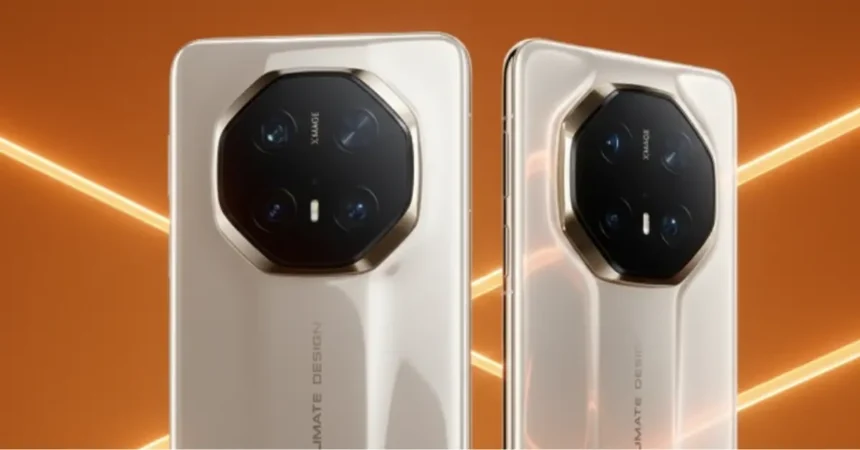
Huawei Mate 80 RS: Huawei has just taken a major leap in smartphone display technology with its new Mate 80 RS Ultimate Design, claiming a world-first achievement in color reproduction. While color gamut standards like BT.2020 have existed in theory for years, this flagship model appears to be the first production phone capable of truly implementing them in both display and photography.
What Makes BT.2020 Special?
BT.2020 — also known as Rec. 2020 — is an advanced wide-color-gamut standard originally devised for ultra-high-definition video. It encompasses a significantly broader range of colors compared to the sRGB and even DCI-P3 gamuts commonly used in current devices. This wider gamut is designed to represent more realistic and vivid hues, especially in HDR content, making visuals appear richer and more lifelike.
For years, BT.2020 existed more as an industry target than a practical feature in consumer hardware. Many manufacturers avoided full implementation because it demands high-end display performance that was difficult to achieve on mobile screens — until now.
Huawei’s Breakthrough Implementation
Huawei’s latest flagship changes the game by integrating full BT.2020 support into both its display pipeline and camera system. According to the company’s senior technology executives, previous generations of phones simply lacked the hardware and software coordination required to handle the extended gamut, leaving BT.2020 as a theoretical benchmark.
The Mate 80 RS’ screen is built on a dual-layer OLED panel with a 6.9-inch size and adaptive refresh rate. This panel natively supports BT.2020, meaning it can accurately reproduce an exceptionally wide range of colors without squeezing or clipping vibrant tones. Combined with high brightness and fine color calibration, users should see deeper saturation and more nuanced visuals in HDR videos and compatible content.
Capture What You See — and More
Perhaps the most unique aspect of Huawei’s implementation lies in photography. The Mate 80 RS doesn’t just display BT.2020 content — it records in that color space too. When its camera system detects scenes that exceed the narrower DCI-P3 gamut, the phone will automatically save the photo using the broader BT.2020 standard.
In practice, this means vivid skies, richly saturated landscapes, and dramatic lighting can be preserved more faithfully in photos than on most other devices. Shots taken in challenging lighting environments — whether bright daylight or golden hour sunsets — have the potential for more accurate color retention, giving photographers a richer, more flexible file for editing or sharing.
A New Visual Benchmark for Smartphones
With this development, Huawei is pushing mobile display performance beyond established color standards and into territory previously reserved for professional video and cinema work. By bringing BT.2020 to a mainstream flagship, the Mate 80 RS positions itself as a showcase for the future of smartphone imaging and visual fidelity.
This isn’t just about brighter colors on a screen — it’s about expanding the visual language of mobile devices so they can represent the world as closely as the eye perceives it. If supported by content and software ecosystems, full BT.2020 support could open the door to a richer multimedia experience on phones.
As more manufacturers chase after broader color reproduction and HDR performance, Huawei’s move with the Mate 80 RS could mark a turning point in how smartphone displays are evaluated — not just for resolution and refresh rate, but for color depth and accuracy that rival professional standards.