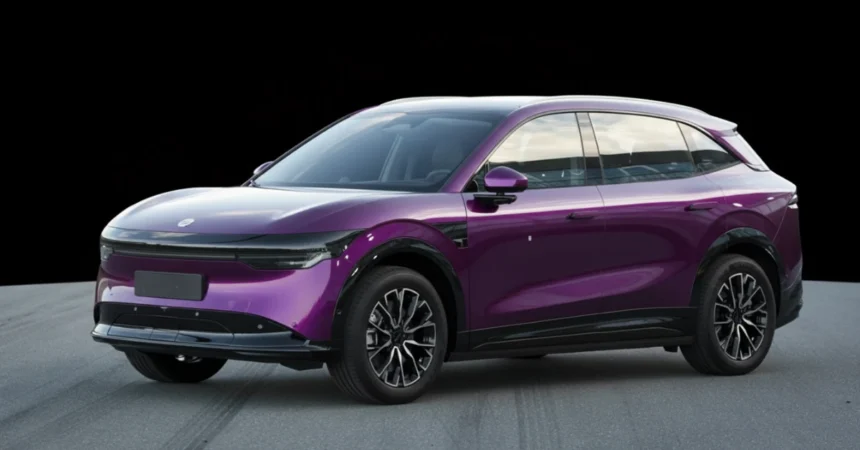
Chinese EV brand Zeekr is considering adding simulated gear shifts and petrol-style engine sounds to its future electric performance cars—technology similar to what Hyundai introduced with the Ioniq 5 N. As electric vehicles become more powerful and more popular in Australia, brands are looking for ways to make them more engaging for driving enthusiasts.
Zeekr’s line-up already delivers massive performance, with some models—like the 7X Performance SUV—producing up to 475kW, even outpacing the final V8-powered Holden Commodore and Ford Falcon sports sedans. Now, the company is exploring ways to bring back some of the emotional feel of traditional petrol engines.
Zeekr Debates Whether Electric Cars Need “Fake Gears”
Ray Chien, Zeekr’s Head of High-Performance Models, revealed that the company is actively debating whether electric cars should feature simulated gear shifting.
According to him, some engineers feel simulated gears are unnecessary—an outdated relic of combustion technology. Others argue that artificial shifts create a more familiar and enjoyable driving experience.
Chien explains:
- EVs naturally don’t need gears.
- But many drivers still enjoy the sensation of shifting.
- Internally, engineers haven’t yet reached a final decision.
Studying the Hyundai Ioniq 5 N
When asked whether Zeekr’s team has evaluated the Hyundai Ioniq 5 N, the best-known EV with fake gears and synthetic engine notes, Chien suggested it’s on their testing list.
He says that whenever a competitor launches an important new model, Zeekr’s departments—including R&D, vehicle dynamics, and NVH (noise, vibration, harshness)—all study it to understand its strengths and weaknesses.
Current Zeekr Models Already Offer Synthetic Sounds
The Zeekr 7X already includes a selection of artificial acceleration sounds, including a V8-inspired soundtrack. However, these effects are not as convincing as Hyundai’s high-performance EV sound profiles.
Chien believes adding more realistic synthesised gears and audio could make electric cars easier to drive on race tracks.
Why Fake Gears Could Help on Track
Chien explains that petrol-powered cars give drivers gear-based speed references. Being in the right gear helps control understeer or oversteer when approaching and exiting corners.
EVs, however, deliver instant torque with no gear changes. This means drivers must learn corner speeds manually, making track driving more challenging until they adjust to the car’s behaviour.
He believes simulated gears could give drivers clearer cues when pushing EVs to their limits.
Managing Heat: Brakes Overheat Before Batteries
While the Ioniq 5 N requires upgraded cooling to maintain full performance on track, Zeekr’s testing has found that brakes tend to overheat first, not the battery pack.
Chien explains that when regenerative braking and mechanical brakes aren’t balanced correctly, the traditional brakes take too much load and heat up quickly.
Zeekr’s next-generation vehicles aim to:
- Strengthen regen braking (targeting up to -0.6g deceleration)
- Improve coordination between regen and physical brakes
- Allow more track laps without brake fade or battery limits
What’s Next for Zeekr?
Zeekr is clearly exploring how to make electric performance cars more engaging—and more track-friendly. With growing interest in character-rich EVs, features like artificial gear shifts and realistic engine sounds could soon appear in future Zeekr performance models.
If you’d like this rewritten again in a short news format, SEO long-form, or YouTube script, just tell me!