In the crowded mid-size SUV segment, where premium brands dominate with sky-high price tags, the Jaecoo J7 emerges as a breath of fresh air. Launched in 2023 as the first model from Chery’s premium Jaecoo sub-brand, the 2025 Jaecoo J7 combines sleek design, cutting-edge hybrid technology, and unbeatable value to challenge established players like the Kia Sportage or Hyundai Tucson. Whether you’re navigating city streets or embarking on weekend getaways, this compact crossover promises versatility without compromising on luxury. In this detailed Jaecoo J7 review, we’ll dive into its specs, features, performance, and why it’s poised to be a top contender in 2025.
Jaecoo J7 Striking Design: Where Style Meets Functionality
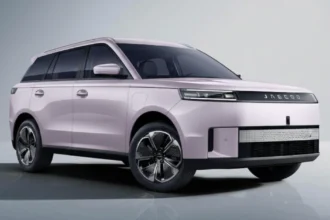
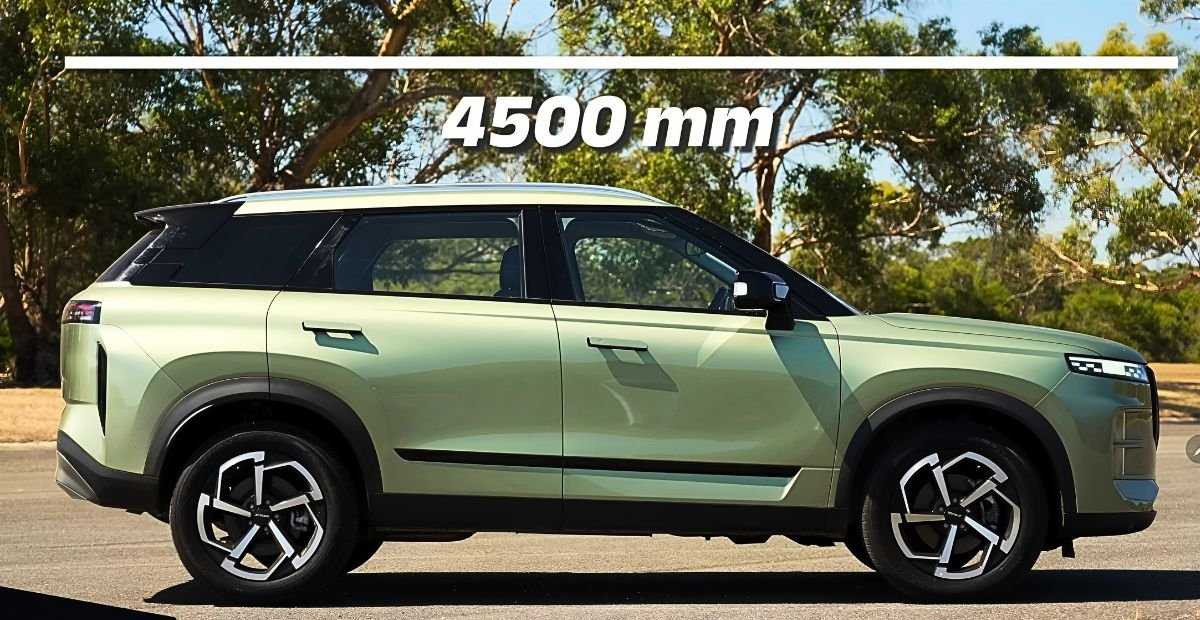
The Jaecoo J7’s exterior is a masterclass in modern aesthetics, blending rugged capability with urban sophistication. Measuring approximately 4,500 mm in length, 1,865 mm in width, and 1,680 mm in height, with a wheelbase of around 2,672 mm, it strikes a balanced profile that’s agile in tight parking spots yet spacious enough for family hauls. Its signature waterfall grille with cascading chrome bars gives it a bold, premium look, complemented by slim LED headlights and full-width taillights inspired by a checkerboard pattern for a futuristic vibe.
Unique touches like power-retractable door handles—resistant to icing in colder climates—and 19-inch aero-optimized alloy wheels enhance both style and aerodynamics. Available in trims like Vortex, Glacier, and Inferno (market-dependent), the J7 offers AWD options for the Inferno variant, making it suitable for light off-road adventures. The panoramic sunroof floods the cabin with natural light, while the floating roof effect from gloss black accents on the mirrors adds a sporty flair. Overall, the Jaecoo J7’s design philosophy emphasizes “technological sophistication,” turning heads without the ostentatious flair of luxury badges.
Jaecoo J7 Luxurious Interior: Comfort and Space for Modern Lifestyles
Step inside the Jaecoo J7, and you’re greeted by a minimalist, tech-forward cabin that punches above its weight. The interior adopts a black-and-white theme with high-quality faux-leather upholstery, heated and ventilated front seats (with memory functions for the driver), and a truncated multifunction steering wheel for effortless control. Rear passengers enjoy ample legroom and air vents, with ISOFIX points for easy child seat installation—ideal for families.
Boot space starts at 412 liters, expandable to over 1,000 liters with seats folded, accommodating strollers, groceries, or weekend gear. Storage is thoughtful, with dual cup holders, a large central console, wireless phone charging, and rear USB ports. The cabin’s double-glazed windows keep noise at bay, creating a serene environment even on highways. In higher trims like Luxury or Summit, you’ll find cooled front seats, heated rear outers, and a powered tailgate with hands-free operation. It’s not just comfortable; it’s practical, with two-level luggage organization and a 540-degree camera for seamless parking.
Powertrain and Performance: Efficient Hybrid Innovation Meets Punchy Petrol
The 2025 Jaecoo J7 offers two compelling powertrain options, catering to eco-conscious drivers and performance seekers alike. The base 1.6-liter turbocharged petrol engine delivers 145 kW (194 hp) and 290 Nm of torque, paired with a smooth 7-speed dual-clutch transmission (DCT). Available in FWD or AWD, it accelerates from 0-100 km/h in about 9-10 seconds, with combined fuel economy around 7.0-7.8 L/100 km. Reviewers praise its responsive handling in urban settings, though some note a slightly hesitant low-speed response.
For those prioritizing efficiency, the PHEV variant—branded Super Hybrid System (SHS) outside China—pairs a 1.5-liter turbo petrol engine with a 150 kW electric motor, yielding a combined 255 kW (342 hp) and 525 Nm. Powered by an 18.3 kWh lithium-ion battery, it boasts an impressive electric-only range of up to 106 km (NEDC) or 88 km (WLTP), with a total combined range exceeding 1,200 km. Fuel consumption dips to as low as 1.0 L/100 km when hybridized, and DC fast charging (40 kW) refills from 30-80% in about 20 minutes. The 0-100 km/h sprint clocks in at 7.6-8.5 seconds, making it surprisingly brisk for a family SUV.
Drive modes include Eco, Standard, Sport, and terrain-specific options like Sand, Mud, Snow, and Off-Road (on AWD models), with the intelligent AWD system reacting in just 0.1 seconds to changing conditions. Braking is confident, and the ride is composed on highways, though some tests highlight a fidgety feel over rough roads.
Safety and Technology: Packed with Premium Features
Safety is a standout for the Jaecoo J7, earning a five-star rating from both ANCAP and Euro NCAP. It includes a comprehensive suite: autonomous emergency braking (AEB), blind-spot monitoring, lane-keep assist, adaptive cruise control with traffic jam assist, driver monitoring, rear cross-traffic alert, and a 360-degree camera. Up to eight airbags (including center and knee) provide robust protection, with high scores in adult (81%) and child (85%) occupancy.
Technology elevates the experience with a 10.25-inch digital instrument cluster and a massive 14.8-inch touchscreen infotainment system powered by a Qualcomm 8155 chip. Wireless Apple CarPlay and Android Auto are standard, alongside voice commands (“Hello Jaecoo”) for climate, navigation, and media. Higher trims add a head-up display (HUD), built-in dashcam, and an eight-speaker Sony sound system for immersive audio. Over-the-air (FOTA) updates and facial recognition add futuristic convenience, though some users critique the touchscreen-heavy controls for lacking physical knobs.
Pricing and Availability: Unmatched Value in 2025
The Jaecoo J7’s pricing underscores its value proposition, starting around $30,000 USD equivalent across global markets. In South Africa, the Vortex trim is R519,900 (~$29,000 USD), escalating to R679,900 (~$38,000 USD) for the AWD Inferno. Australia’s PHEV Summit 2WD drives away from $47,990 AUD (~$32,000 USD), while UK pricing ranges from £30,115 to £35,165 (~$38,000-$44,000 USD) for Deluxe to Luxury PHEV. These figures include generous standard kit, undercutting rivals by 20-30%.
Availability is expanding rapidly in 2025, with sales in Europe (including UK production in Barcelona), Australia, New Zealand, South Africa, Southeast Asia, and more. A seven- to eight-year unlimited-km warranty adds peace of mind, covering the battery for eight years in PHEV models.
Pros and Cons: What Stands Out (and What Doesn’t)
Pros:
- Exceptional value with premium features at budget prices.
- Spacious, family-friendly interior and practical boot.
- PHEV’s long electric range and low running costs.
- Five-star safety and advanced driver aids.
- Stylish design and long warranty.
Cons:
- Ride can feel fidgety on uneven roads.
- Infotainment system may frustrate with touchscreen reliance.
- Handling lacks the precision of established brands.
- Boot space is average compared to segment leaders.
- Limited reliability data as a new entrant.
Conclusion: Is the Jaecoo J7 Right for You?
The 2025 Jaecoo J7 isn’t just another SUV—it’s a statement from Chinese automakers on how far they’ve come in quality and innovation. With its blend of efficient powertrains, tech-laden cabin, and wallet-friendly pricing, it excels as an urban adventurer or family workhorse. If you’re seeking a feature-packed alternative to pricier options without sacrificing modernity, the J7 delivers. Test drive one to experience the hype firsthand; it might just redefine your expectations of what an affordable SUV can be.