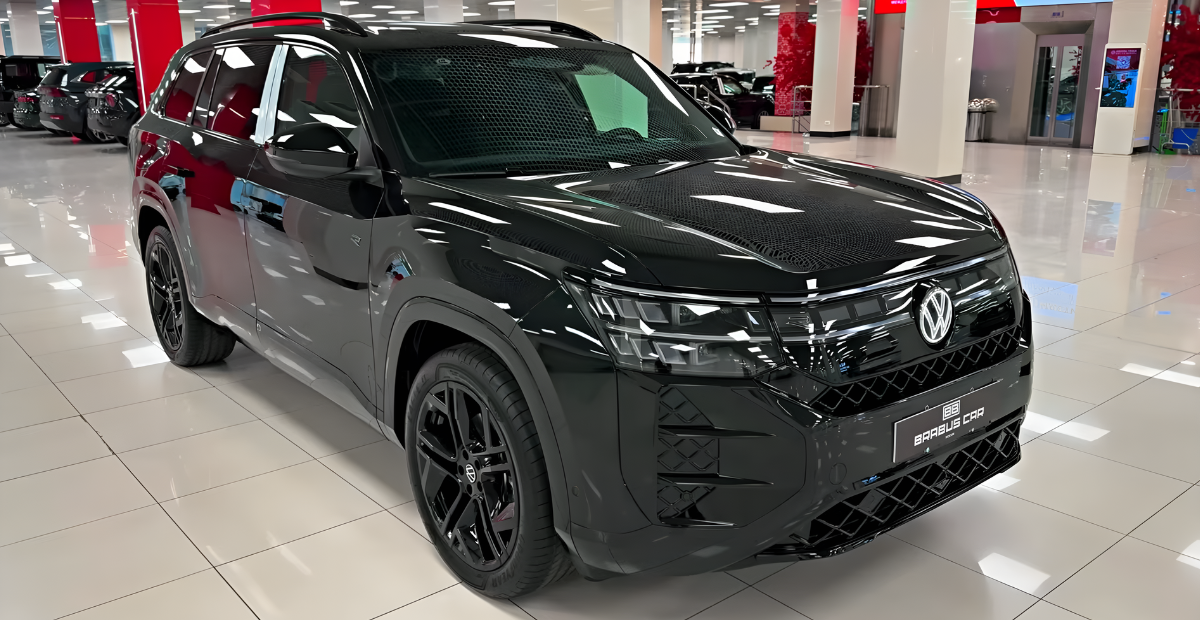
2026 Volkswagen Tayron has emerged as a major player in the large family SUV segment, especially for markets like Australia. With its arrival, 2026VW replaces the Tiguan Allspace and stakes a claim between mid-size and premium SUVs. The 2026 Tayron promises more space, updated tech, multiple powertrain options, and a serious value proposition. Let’s break down what we know so far.
Overview
The 2026 Volkswagen Tayron is a large, family-oriented SUV built to seat up to seven passengers, designed to fill the gap in the VW SUV lineup between the Tiguan and the Touareg. It is larger and more spacious than the outgoing Tiguan Allspace and shares much of its technical basis with newer generation VW SUVs, but with added dimensions to deliver more utility.
Here are some of its defining points:
- Offered in five- and seven-seat configurations, depending on trim.
- Designed for families who need more room, more features, and a more premium feel than smaller SUVs, but without stepping up to full luxury pricing.
- Multiple engine variants including petrol turbocharged units; 4Motion (Volkswagen’s AWD system) appears in higher trim levels.
- Strong safety, comfort, and tech features across the range, aiming to provide value in both urban and longer-distance driving.
2026 Volkswagen Tayron Launch Date
- In Australia, Volkswagen has confirmed that the Tayron will arrive in the fourth quarter of 2025.
- Globally, the Tayron was first revealed in October 2024. Sales and deliveries commenced in some markets in early 2025.
- For many markets, pre-orders are open or will open close to launch. Some variants may roll out after the initial launch, especially higher trim and AWD versions.
2026 Volkswagen Tayron Price
Pricing depends heavily on market, trim, seat count, and drivetrain. Below are examples (Australian market, and where available, other regions) to give a sense of the range.
| Variant | Price (Australia, before on-road costs) | Key Features |
|---|---|---|
| Tayron 110TSI Life (base 7-seater) | A$48,290* | 1.5-litre turbo petrol, 110 kW / 250 Nm, front-wheel drive, 18-inch wheels, 12.9-inch infotainment, safety suite, etc. |
| Tayron 150TSI Life | A$53,990 | 2.0-litre turbo, 150 kW / 320 Nm, likely all-wheel-drive or higher grip, five seats in some editions. |
| Tayron 150TSI Elegance | A$59,490 | More luxury finishes – leather or leather-style trim, heated/ventilated/massaging seats, LED Plus headlights, etc. |
| Tayron 195TSI R-Line | A$73,490 | 2.0-litre turbo, 195 kW / 400 Nm, 4Motion AWD, sport styling, premium tech like matrix LEDs, upgraded sound, etc. |
*Prices exclude on-road costs.
Other markets may see different pricing depending on taxes, local content, incentives, and engine availability.
2026 Volkswagen Tayron Specs (Engine, Dimensions, Performance)
Here are the key specifications that define the 2026 Tayron:
Engine & Drivetrain Options
- 110TSI: 1.5-litre turbo petrol, ~110 kW and ~250 Nm torque. This version is front-wheel drive.
- 150TSI: 2.0-litre turbo petrol, ~150 kW and ~320 Nm. Higher trims get AWD (4Motion) in some markets. Five or seven seats depending on trim.
- 195TSI R-Line: Strongest petrol version, 2.0 litre, ~195 kW / 400 Nm, AWD, with performance styling. 0–100 km/h time claimed to be ~6.1 seconds.
Dimensions & Interior Capacity
- Length: About 4,792 mm, which gives the Tayron more presence and interior space compared to Tiguan Allspace.
- Wheelbase: Extended compared to Tiguan — approximately 110 mm more in many versions.
- Boot / cargo space: With third row folded/or configured as five seats, you get around 850 litres of luggage capacity; with all seats up lower capacity, and if using 7 seats you lose some boot space. Also ~345 litres with all seven passengers.
Performance
- The 195TSI R-Line variant: ~195 kW (265 PS), 400 Nm, AWD, 0–100 km/h in ~6.1 seconds.
- Lower‐powered versions are naturally slower; the 1.5-litre 110TSI is the baseline workhorse.
2026 Volkswagen Tayron Fuel Economy
Fuel economy varies by engine, drivetrain, load, and driving conditions of course, but published and expected figures help set expectations.
- The lighter 1.5-litre 110TSI version will deliver the best fuel economy in the lineup. One can expect moderate consumption around ≈ 6-8 L/100 km under combined driving for that engine when lightly loaded.
- The 2.0-litre petrol/4Motion AWD versions will obviously consume more—likely in the vicinity of 8-10 L/100 km under average conditions, rising further under heavy loads, towing, or high-speed stretches.
- Additional features like aerodynamic design, lower drag, efficient transmission (7-speed DSG), and possibly cylinder deactivation or mild hybrid aids could help improve consumption in stop-start city driving.
Because some of the data is still preliminary or region-dependent, prospective buyers should check local VW specs when the Tayron is released in their area.
2026 Volkswagen Tayron Interior, Features & Comfort
The Tayron aims to offer upscale comfort and tech, targeting families and buyers who expect more than just utility from their SUV.
- Seating: Five- and seven-seat options. The third row appears more usable, thanks to the longer wheelbase and more cabin space.
- Materials & Finish: Higher trims bring leather or premium upholstery, front seats with heating, ventilation, memory and massage functions. Soft touch materials, ambient lighting, good insulation for road noise.
- Infotainment & Digital Displays:
- Infotainment touchscreen: ~12.9-inch in many trims.
- Digital instrument display (“Digital Cockpit Pro”) included.
- Wireless Apple CarPlay / Android Auto. Wireless phone charging & connectivity.
- Safety & Driver Assist Features: Travel Assist (adaptive cruise with lane-centering & stop-and-go), side assist, park assist, 360-degree camera, blind-spot monitoring, front cross-traffic alert, exit warning. At least nine airbags.
- Comfort & Appearance: LED Plus headlights, illuminated grille strip, LED tail-lights, 18- to 20-inch wheels depending on trim, sunroof/panoramic roof optional on higher trims. R-Line gets sportier styling and premium audio (Harman Kardon in top trim).
2026 Volkswagen Tayron Review (Impressions & Critique)
While full long-term tests are still being done, early impressions, media drives, and spec comparisons suggest the Tayron has both strengths and trade-offs.
Strengths
- Space & Flexibility: The longer body and stretched wheelbase mean genuine usable space, especially for families needing seven seats. More cargo room when third row folded down.
- Value for Features: Even base trims include a strong safety suite and infotainment, which in many rivals are optional extras. The premium touches in higher trims push Tayron toward more luxury territory without as steep a price.
- Engine Performance (Higher Trims): The 195TSI R-Line offers lively performance, respectable acceleration (6.1 s for 0-100 km/h), and AWD grip. Ideal for buyers who want both utility and spirited driving.
Weaknesses / Considerations
- Fuel Consumption in Real-World: Higher trims with AWD and the heavier build will likely consume more than the official or estimated figures suggest, especially in mixed urban/highway use.
- Cost of Ownership: With advanced features, larger size, and premium styling, resale value, maintenance, tyres/wheels, and fuel costs will be higher.
- Availability of Trims / Timing: Some of the more desirable trims (e.g. R-Line, AWD, premium features) may be delayed or have limited stock in certain markets. Optional extras may drive up the price considerably.
- Hybrid / Diesel Options: In markets like Australia, current confirmations are petrol-only for the initial Tayron variants. Hybrid or diesel powertrains may not be available at launch (or may come later).
2026 Volkswagen Tayron Fuel Economy (More Detail & Expectations)
Since the official fuel economy figures for all variants are not fully published everywhere, here is what can be reasonably expected based on spec, comparing similar VW powertrains and market data:
| Variant | Estimated Combined Fuel Usage* | Key Factors / Notes |
|---|---|---|
| 110TSI, 1.5-litre FWD, base trim | ~ 6.0-8.0 L/100 km (≈ 37-40 mpg US) | Light load, highway-weighted, efficient gear ratios |
| 150TSI AWD / 2.0-litre petrol | ~ 8.0-10.0 L/100 km | AWD drag, heavier weight, higher performance |
| 195TSI R-Line AWD / performance model | possibly >10.0 L/100 km under heavy acceleration or combined urban/highway | The power output, tyres, wheels, and performance tuning will worsen baseline economy somewhat |
* Estimates based on manufacturer-published data in some markets, comparison to similar VW models, and early media reports. Real-world usage (traffic, hills, towing, etc.) will vary.
Who Should Buy It & Where It Shines
The 2026 VW Tayron is particularly well suited to:
- Families needing seven seats with real space and not wanting to go into full large SUV territory.
- Buyers looking for strong safety features and modern driver assistance as standard rather than luxury extras.
- Drivers who want a balance of comfort, tech, and performance — especially if opting for the R-Line trim.
- Those who want more refinement, better styling, and interior amenities than smaller mid-size SUVs.
It may be less ideal for:
- Buyers seeking hybrid or diesel fuel savings from day one (depending on local availability).
- Those who frequently drive in tight urban cores where large size and larger trims (with bigger wheels) mean parking, turning radius, etc., are more challenging.
- Customers who want ultra-low running costs — the premium tech and bigger engine options will carry higher maintenance, parts, fuel, and insurance costs.
Competitors & Market Position
The Tayron aims to compete with (or sit alongside) the following rival SUVs:
- Hyundai Santa Fe – similar in seating capacity, tech features, and value for families. Tayron will likely compete on feature content and space.
- Toyota Kluger (Highlander in some markets) – known for reliability and resale, so Tayron must match durability and comfort.
- Kia Sorento – another strong family SUV with seven seats and good value. Sorento’s hybrid options may give it an edge in economies.
- Mazda CX-60 / CX-80 – higher quality interior feel and driving experience; Tayron must deliver interior refinement and ride comfort to match.
Volkswagen positions the Tayron to attract customers who want “something more than a mid-sized SUV” without tipping into luxury price brackets. Its space, tech, and features look aimed to be compelling in major markets, especially Australia where competition is fierce in the seven-seat large SUV class.
Conclusion
The 2026 Volkswagen Tayron looks like a strong new entrant in the large family SUV category. With its mix of spaciousness, modern styling, tech, safety, and varied engine choices, it offers compelling value for those needing flexibility and comfort.
If you’re considering one, key questions to ask or wait for:
- Which engine / drivetrain variant is offered in your market (especially whether AWD or higher-power trims are available)?
- Real fuel consumption figures once independent testing is available.
- The cost of extras and how quickly prices climb when you move up trims.
- After-sales support, servicing costs, warranty, and availability of parts in your region.