2026 Jeep Compass Pros and Cons:
Pros
- Strong, solid build
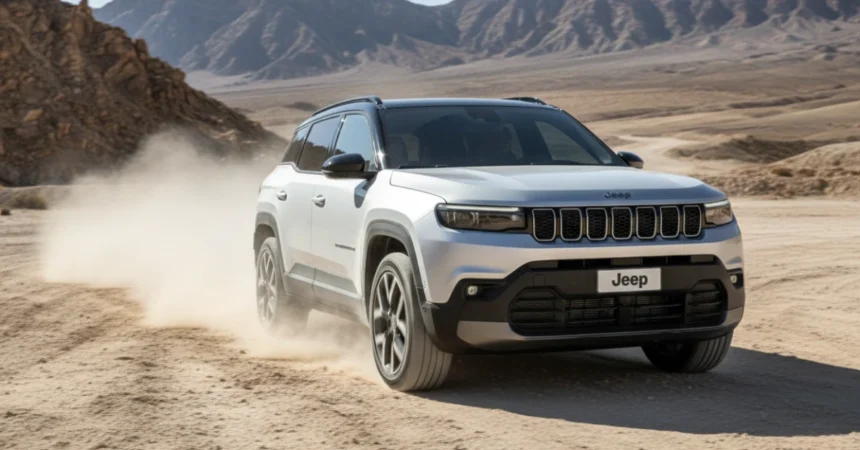
- Bold, unmistakably Jeep styling
- Much-improved cabin design
Cons
- Mild-hybrid isn’t as fuel-efficient as rivals
- Disappointing towing capacity
- Only the electric model offers true all-wheel drive
The small SUV segment has never been more competitive, and Jeep hasn’t enjoyed the same dominance it once had. With more brands filling the market than ever, the pressure is on. The all-new third-generation Jeep Compass aims to change the tide and re-establish Jeep as a serious contender, especially for buyers seeking a stylish, tech-loaded compact SUV with a rugged attitude.
The new model is built on Stellantis’ STLA Medium platform, giving it the flexibility to support mild-hybrid, plug-in hybrid, and fully electric powertrains. It’s grown to around 4.5 metres in length and carries a much more substantial presence than the outgoing model.
Before it arrives in Australia, we had the chance to experience both hybrid and fully electric versions at the European launch in Barcelona.
Expected Pricing for Australia
The current Compass retails at roughly $49,000 drive-away, and while official pricing for the new generation hasn’t been revealed yet, Jeep will likely try to keep it in a similar ballpark. Despite the vehicle growing in size and gaining more tech, competitive pricing will be essential for attracting new buyers.
If Australia follows Europe’s rollout strategy, the range will likely begin with:
- e-Hybrid (MHEV)
- Entry-level fully electric variant
Later additions are expected to include:
- Plug-in hybrid (PHEV)
- More powerful long-range EV
- Dual-motor 4xe electric AWD flagship
Interior: A Major Leap in Quality and Design
Step inside the new Compass and the improvement is immediately obvious. The cabin feels more modern, more premium, and far more thoughtfully laid out than the previous model.
Spacious, Practical, and Upmarket
A flatter, wider dashboard opens up the cabin visually, while an integrated open storage shelf in front of the passenger adds handy practicality. Materials feel softer and more refined, and overall, the Compass now competes convincingly with more sophisticated rivals.
Big Tech Upgrade
Key features include:
- 10.25-inch digital instrument cluster
- Optional head-up display
- Large 16-inch central touchscreen
- Wireless Apple CarPlay & Android Auto
- Haptic shortcut buttons for key functions
The new touchscreen is impressive, though some menu layers require deeper digging. A physical volume knob is a welcome touch, and the centre console benefits from a neat rotary gear selector that frees up storage space.
Comfort & Seating
Standard models come with cloth upholstery, while higher trims add:
- Heated front seats
- Optional ventilation and massage functions
- Larger wireless charging pad
- Rear seat USB-C ports
Passengers in the back enjoy more space thanks to the larger body, and the boot now offers a very useful 550 litres, up from 424L previously.
Powertrain Options: Hybrid and Electric Choices
The 2026 Compass will eventually offer multiple electrified powertrains.
1.2L Mild-Hybrid (MHEV)
- 108 kW combined output
- Small 0.9 kWh battery
- Can drive on electric power during low-speed, light-throttle moments
While smooth around town, the mild-hybrid isn’t dramatically more efficient than a normal petrol engine.
Fully Electric Compass (Single Motor)
Specs:
- 158 kW / 345 Nm
- 74 kWh NMC battery
- 500 km claimed range (WLTP)
- 11 kW AC charging (22 kW optional)
- 160 kW DC fast charging
- 0–100 km/h: 8.5 seconds
This is expected to be the main model for Australia, offering smooth performance and impressive refinement.
Long-Range EV
Coming later with:
- 97 kWh battery
- 172 kW motor
- Approx. 650 km range
Dual-Motor 4xe AWD
- 280 kW total output
- Dedicated rear motor for traction
- Estimated 600 km range
This will be the only true AWD variant—something traditional Jeep buyers will appreciate.
On the Road: More Civilised Than Ever
Jeep has significantly improved how the Compass drives. The suspension feels firm but controlled, giving the car a reassuring solidity on the road.
Electric Version
- Low centre of gravity enhances stability
- Quiet cabin (thanks to thicker glass)
- Strong one-pedal driving capability
- Smooth, linear power delivery
Hybrid Version
- Lighter and slightly more agile
- Noticeably less power than the EV
- Still refined, especially in city driving
The only real drawbacks are the low towing limits:
- 1000 kg for electric
- 1150 kg for e-Hybrid
Not ideal for buyers who frequently tow.
Safety Features
Official ANCAP/Euro NCAP ratings are pending, but models on the same platform score well. Standard safety kit includes:
- Autonomous emergency braking
- Lane departure warning
- Cruise control
- Front & rear parking sensors
- ISOFIX anchors
Available upgrades add:
- 360° camera
- Blind-spot monitoring
- Predictive adaptive cruise control
- Semi-autonomous lane change
- Head-up display
Running Costs
During testing, the electric Compass used 20.5 kWh/100km, slightly higher than the WLTP figure but still efficient.
Charging the 74 kWh battery at an off-peak rate (~20c/kWh) costs under $15 for a full charge.
Ownership
- 5-year/100,000 km warranty
- 5 years roadside assist (service-activated afterward)
- Annual servicing
Final Verdict
The 2026 Jeep Compass is easily the most refined and versatile version the brand has produced. With a sharper design, a modern interior, and a suite of electrified powertrains, it finally feels like a small SUV built for today’s buyers.
It won’t be the best option for heavy towing, and hybrid efficiency could be better, but the overall package is polished, comfortable, and far more competitive than before.